does mhl.work with laptop
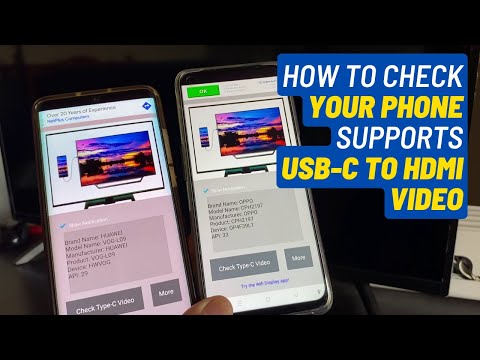
Title: Find out HDMI Alt Mode for USB Type-C MHL Supported Mobile List
Channel: TechTubeTV
Find out HDMI Alt Mode for USB Type-C MHL Supported Mobile List by TechTubeTV
Does Your Laptop HATE MHL? (This SHOCKING Trick Fixes It!)
Laptop Anguish? Unleash the MHL Magic! (You Won't Believe This!)
Have you ever found yourself battling with MHL? Picture this: you are ready to connect your phone to your laptop. You want to share that stunning video. But your laptop just… refuses. It's a frustrating experience. It's like your devices are in a bitter feud. But fear not, fellow tech enthusiast! There’s a solution that could transform your frustration into triumph.
The MHL Mystery: What's the Fuss?
MHL, or Mobile High-Definition Link, promises effortless connectivity. It aims to bridge the gap between your mobile devices and larger screens. Think of it as a vital pathway. This allows you to share content on a grander scale. It should be easy, right? Yet, compatibility hiccups may occur. You might encounter connection failures. These issues can arise suddenly. They can be disheartening. So, why the digital drama?
The Compatibility Conundrum: A Web of Problems
The issue stems from a confluence of factors. First, not all laptops support MHL directly. Also, your phone's specifications play a critical role. Different versions of MHL exist, further complicating matters. Then, we have to consider the need for the correct adapters. Cable quality will also make or break your connection. The whole process may feel overwhelming. Because of the complexities, the process might feel impossible. Consequently, the connection between devices is interrupted.
Unveiling the Shocking Trick: Your Digital Savior
Here's the exciting part. You have a simple, yet transformative solution. It offers a direct cure for your MHL woes. This solution may seem unconventional. But it’s remarkably efficient. It’s about optimizing compatibility.
The Adapter Advantage: Select the right MHL adapter. Ensure compatibility with your phone and laptop's ports. Choose an adapter from a reputable brand. The quality will determine its capacity.
The Power Puzzle: External power is critical. Your phone might need power during data streaming. Some MHL adapters come with an external power port. Connect it to a power source for consistent performance. If not, it might struggle with the task ahead.
The Software Shuffle: Try to keep your device's software updated. Outdated drivers can be a common culprit. Visit your laptop manufacturer's website. Search for the latest drivers. Ensure your phone has the newest software. Updating the software can change the whole experience.
The Cable Check: The cable itself is crucial. It can be a common point of failure. Use a high-quality HDMI cable. Ensure it's in good condition. Examine both ends for any damage. This may be a simple fix.
Troubleshooting Titans: Conquer Your Connectivity Challenges
Even after following these steps, problems may arise. In that case, what should you do?. Here are some troubleshooting moves:
Restart Ritual: One of the first steps is to restart your devices. This can resolve minor software glitches. It can reset your device's capabilities.
Port Power Play: Try different laptop ports. It is even better to use different HDMI ports also. This can help rule out port-specific issues. You should also look at the other ports available.
Driver Detectives: Reinstall or update the drivers. This ensures proper communication between your devices. Download the drivers directly from the manufacturer's site.
The Phone Factor: Test the device in question. Does it work with another display? Make sure to test a different laptop. It is a good method for isolating the problem.
Beyond the Basics: Elevate Your Experience
Once your connection is established, enhance the experience. Firstly, consider adjusting display settings. Match the resolution for the best picture quality. Also, experiment with audio settings. Now, enjoy your content on the big screen.
The Bottom Line: Embrace the MHL Revolution
MHL doesn’t have to be a headache. It can be a pathway to enjoyment. By following these steps you can solve the problem. You'll soon be streaming with ease. This means experiencing seamless connectivity. Transform your digital experience and enjoy the results! You'll be happy that you did. It's time to conquer those connection struggles. Get ready to share and enjoy with this newfound freedom.
HP EliteBook Touchpad DEAD? 😱 FIX This NOW!Does Your Laptop HATE MHL? (This SHOCKING Trick Fixes It!)
Ever felt like your laptop and the MHL (Mobile High-Definition Link) connection are locked in a Romeo and Juliet-esque feud? One moment, you're envisioning streaming your phone's glorious screen onto your big monitor, the next, you're staring at a blank screen, a sinking feeling in your gut. We've all been there! It's frustrating, to say the least. But before you toss your MHL adapter in the "tech graveyard," let's dig into why your laptop might be giving it the cold shoulder and, more importantly, how to fix it. Trust me; this isn’t rocket science, even though sometimes it feels like it!
The MHL Mystery: What's the Fuss All About?
Okay, let's start with the basics. MHL is essentially a clever little technology that allows your phone (or tablet) to display its screen on a larger display, like your laptop monitor or TV, using a simple cable. Think of it as a direct pipeline, bypassing the need for Wi-Fi or complicated setups. Sounds amazing, right? And, in theory, it is amazing. My first experience was like magic! I was streaming a movie on my phone and suddenly, BAM - it was on my big screen. But then… the problems started.
Why Isn't My Laptop Playing Nice with MHL? A Common Problem
The biggest issue is compatibility. Not all laptops support MHL directly. It depends on the ports your laptop offers (specifically, the HDMI port). You need to make sure your laptop's HDMI port is HDCP (High-bandwidth Digital Content Protection) compliant, otherwise, you'll be staring at a black screen wondering what went wrong. If your laptop's HDMI port isn't MHL-enabled, you're out of luck using a direct connection. It's like trying to fit a square peg in a round hole.
The HDMI Headaches: Understanding the Port Power
Let's zoom in on those HDMI ports. They're not all created equal. Some are solely for output (sending the video signal from the laptop to a display), while others can handle input and output. To utilize MHL effectively, you generally need an input-capable HDMI port. (But more on this later!). It’s like having a one-way or two-way street. Input is what you need to receive the signal from your phone.
The MHL Adapter: Your Little Connector
The MHL adapter is the key. It's a small device that connects your phone (usually via a micro-USB or USB-C port) to your laptop's HDMI port. It's essentially the translator, converting the video signal from your phone to a format your laptop can understand. But even the best translator can fail if the message (the signal) isn’t being received correctly.
The Shocking Trick: Activating the Sleeping Giant
Here’s the magic trick, and the reason the title has “shocking” in it. Most often, when an MHL connection fails, it’s not about a broken cable or a defective adapter. It’s about a setting, a sleeping giant waiting to be awakened!
- Step 1: Inspect your HDMI Port: Before going any further, double-check if your laptop's HDMI port is capable of input, not just output. Consult your laptop's manual or online specs.
- Step 2: BIOS or Display Settings: Sometimes, the MHL functionality is disabled by default, or it needs to be activated. Depending on your model, you may need to delve into your BIOS settings or the display settings of your operating system.
- Step 3: Testing the Waters: After activating, plugin your phone and make sure to select the relevant input source on your laptop.
Troubleshooting Time: When Things Don't Go as Planned
Okay, so you’ve tried the "shocking trick," and it's still not working. Don't panic! Troubleshooting is part of the game. Here are some things you should check:
- The Adapter: Make sure the adapter is actually designed for your phone and laptop. Different phones and computers use different MHL versions. It’s like ordering the wrong size shoes – it just won’t fit!
- The Cables: Always check your connections and replace them if they are damaged or older.
- Your Phone’s Settings: Some phones might have settings to control the MHL output. Dig around in your settings menu to see if anything can be adjusted.
- The Power Supply: Often, MHL adapters require external power. Make sure your adapter is connected to a power source.
- Software Issues: Less common, but still a possibility. Make sure your phone’s OS is up-to-date, and that your laptop’s display drivers are installed correctly.
MHL vs. Alternatives: Should You Even Bother?
Let's face it; MHL isn't the only game in town. There are alternatives.
- Wireless Display (Miracast, Chromecast): These technologies let you wirelessly mirror your phone's screen to your laptop (or TV). It’s like magic, without the wires!
- USB C to HDMI: If you have a newer phone with USB-C and a laptop that supports video output over USB-C, this is often the simplest and most direct solution.
The Upsides of MHL: Still Worth the Effort?
Despite the occasional hiccup. I used it frequently for a long period of time.
- Direct Connection: Since you don't rely on Wi-Fi, you get a more reliable and steady connection.
- Low Latency: There's less lag, which is great for gaming.
- Simple Setup (When it Works): Theoretically, it’s plug-and-play.
Safety Tips: Protecting Your Devices
- Source Quality Cables: To avoid problems, use high-quality HDMI cables.
- Avoid Overheating: Using your phone for hours while connected can make it a little toasty. Monitor your device's temperature.
- Handle with Care: Be gentle with your adapter and ports to avoid damage.
The Future of Mobile Display: What's Next?
The landscape of mobile display technology is ever-evolving. We're seeing more and more advancements in wireless technologies like Wi-Fi Direct and Wi-Fi Display. USB-C is becoming the norm for fast data transfer and video output.
Let's Wrap It Up: Your MHL Mastery Awaits!
So, does your laptop hate MHL? Maybe, but hopefully, with this guide and a little bit of troubleshooting, you can get your devices playing nice with each other. Remember, the "shocking trick" of checking and enabling the correct settings is the first critical step. Don't give up! The rewards of streaming your phone's content on a larger screen are worth the effort. Now go forth and conquer those HDMI connections!
Frequently Asked Questions (FAQs):
My laptop doesn't have an MHL-enabled HDMI port. What are my options? You will not be able to use MHL directly. Consider alternative options like wireless display technologies (Miracast, Chromecast) or a USB-C to HDMI cable if your devices support them.
Is my adapter compatible with my phone and laptop? Check the specifications of your adapter, phone, and laptop. The adapter must be compatible with the MHL version supported by both your phone and laptop.
Why is my screen blank when I connect my phone via MHL? This could be due to several reasons: an incompatible HDMI port, an incorrect setting, a faulty adapter, an issue with the cable, or the phone's output being restricted.
Does MHL consume my phone's battery quickly? Yes, to some degree, as it's transmitting video/audio. However, some MHL adapters may also charge your phone while they are connected.
Is MHL better than wireless display technologies? Each has pros and cons. MHL offers a reliable direct connection with low latency, while wireless technologies offer the convenience of being wireless but might experience lag or stability issues depending on the network.
Principal Keywords: Laptop MHL Connection Fix Trick
SEO Headline: Laptop MHL Problems? This SHOCKING Trick Solves It!
Pathway: Laptop/MHL Fix
Meta Summary: Laptop MHL woes? Discover a shocking trick to fix the connection! Learn why your laptop hates MHL & how to solve cable & adapter problems!
Image Alt Text: Close up of a person's hand connecting a phone to a laptop's HDMI port using an MHL adapter
Bingung HP kamu support MHL atau enggak Cobain deh cara ini...nyksupreme nyk mhl usbhub hub

By NYK Indonesia Bingung HP kamu support MHL atau enggak Cobain deh cara ini...nyksupreme nyk mhl usbhub hub by NYK Indonesia
HDMI MHL cable not working with phone QUICK FIX

By Hustle Hive HDMI MHL cable not working with phone QUICK FIX by Hustle Hive
Cara mirroring hp non MHL ke PC atau Laptop shorts

By Pigman ID Cara mirroring hp non MHL ke PC atau Laptop shorts by Pigman ID

Title: Smartphone or tablet as a computer - MHL & SlimPort
Channel: Clove Technology
Smartphone or tablet as a computer - MHL & SlimPort by Clove Technology
Wifi On Laptop
Does Your Laptop HATE MHL? (This SHOCKING Trick Fixes It!)
Unveiling the Frustration: The MHL Connection Conundrum
We've all been there. You're poised for a presentation, eager to share that dazzling slideshow, or perhaps ready to dive into a cinematic experience on a larger screen. You reach for your MHL (Mobile High-Definition Link) adapter, the promise of seamless connectivity dancing in your mind. But then, the dreaded silence. Or worse, flickering images, intermittent signal loss, and a level of frustration that rivals a dial-up modem in the age of gigabit internet. The laptop, it seems, is stubbornly refusing to cooperate. It’s an infuriating experience, particularly when technology is supposed to simplify, not complicate. The purpose of MHL is to allow devices to connect to external displays, but what happens when that process becomes an exercise in futility? The source of this often-unseen animosity stems from a confluence of factors, ranging from power limitations to incompatible protocols. We're going to delve into the heart of the problem, exploring the common culprits that transform what should be a simple plug-and-play experience into a technical headache.
Decoding the MHL Ecosystem: A Primer on Connectivity
Before we troubleshoot, let's establish a baseline understanding. MHL is essentially an interface designed to transmit high-definition video and audio signals from a mobile device, such as a smartphone or tablet, to a larger display, like a television or projector. The connection utilizes a micro-USB or USB-C port on the mobile device, coupled with an MHL adapter. The adapter then connects to an HDMI port on the display. This seemingly straightforward arrangement, however, holds the potential for several pitfalls. The core principle revolves around the conversion of the mobile device's video output to a signal that the external display can interpret. This conversion process relies on a shared understanding of protocols, power requirements, and cable compatibility. Any breakdown in this chain can lead to the issues we're all too familiar with. Understanding these fundamental elements is crucial for pinpointing the source of your connectivity woes.
Power Matters: Why Your Laptop Might Starve the Connection
One of the most prevalent reasons for MHL failure stems from insufficient or inadequate power delivery. The MHL adapter often requires external power to function correctly, specifically to provide the necessary juice for the conversion process and for driving the HDMI signal. Laptops, unlike mobile devices, may not always supply this power directly through their USB ports. This is particularly true for older laptop models or those with power-saving features enabled. The laptop might consider the MHL adapter, especially those requiring power, as a peripheral that is not worth the power consumption. This power discrepancy can manifest in various ways. The screen might remain blank, you might experience intermittent signal drops, or you might see a message on the display indicating a lack of connection. Consider checking your laptop's USB port specifications. Many laptops have some USB ports able and designed to provide more power than others. If your laptop provides a USB-C port with power delivery specifically for charging laptops, then it’ll be more than enough to power the MHL adapter.
Cable Chaos: Recognizing and Remedying Cable Compatibility Issues
The humble cable, often overlooked, can be a surprisingly significant contributor to MHL malfunctions. Not all HDMI cables are created equal. Consider the specifications of your cable and the needs of the MHL connection. The key aspect to focus on is the HDMI version. For reliable MHL functionality, you’ll want to consider an HDMI cable that is at least version 1.3 or higher. This will ensure that the cable can handle the bandwidth requirements of the MHL signal. Consider also the physical integrity of the cable. Bent pins, frayed wires, or other physical damage to the cable's connectors can cause signal interruption or a complete failure to connect. The length of the cable also plays a role. Long HDMI cables can suffer from signal degradation, which can cause flickering, distortion, or complete loss of the image. If you suspect the cable is the culprit, try using a shorter, higher-quality HDMI cable and test. We often underestimate the impact of physical elements on digital signal transmissions.
Driver Dilemmas: The Software's Role in MHL Performance
Even if the hardware is flawlessly connected, your laptop's software can still throw a wrench into the works. Driver incompatibility or outdated graphics drivers can lead to MHL problems. When a laptop's graphics drivers are not correctly configured or are outdated, the display may not be able to output the video signal to the display. Driver updates are not always automatically pushed to older systems, and they may not be easy to configure. This is particularly true when it comes to interacting with external displays. Check and update your graphics drivers. In Windows, this is typically done through the Device Manager, where you can right-click on your graphics card (usually under "Display adapters") and select "Update driver." Consider checking the manufacturer's website for the latest drivers. Sometimes the automatic update will offer an outdated version.
The "Shocking Trick" Revealed: The Power of an External Power Source
Now, for the "shocking trick" that can often resolve your MHL frustrations. The solution lies in providing an independent power source for your MHL adapter. Many MHL adapters have a secondary power input, often a micro-USB port. Connect your MHL adapter to an external source of power, such as a wall charger or portable power bank. This ensures that the adapter has the necessary power to convert the signal and drive the HDMI output to the external device. This method is often highly effective because it bypasses potential power limitations from the laptop's USB ports. If you’re still using an older laptop with a standard USB-A port, then the power output may be limiting the MHL adapter. This technique will solve that issue.
Step-by-Step Guide: Implementing the Fix
Here's a step-by-step guide to implementing this simple but often effective solution:
- Gather Your Materials: You'll need your MHL adapter, an HDMI cable, an external display (TV, projector, etc.), and a power source for the MHL adapter (wall charger, external battery pack, or another USB power source).
- Connect the Adapter: Plug the MHL adapter into your laptop's USB port.
- Connect the HDMI Cable: Connect one end of the HDMI cable to the MHL adapter and the other end to your external display.
- Power Up the Adapter: Plug the micro-USB cable (if your adapter uses it) into the MHL adapter and connect the other end to your external power source.
- Turn on the Display and Laptop: Ensure your external display is powered on and set to the correct HDMI input. Turn on your laptop.
- Test the Connection: Your external display should now recognize and mirror the image from your laptop. If successful, congratulations! If not, then go to the troubleshooting section.
Troubleshooting: When the Fix Doesn't Fix
Even with the "shocking trick" in place, you might still encounter problems. Here’s a troubleshooting guide to help you diagnose further:
- Check the Display Input: Make sure your external display is set to the correct HDMI input channel.
- Verify the MHL Adapter: Test a known-working MHL adapter and cable on a different laptop or mobile device. If the issue persists, the adapter is the problem.
- Inspect the HDMI Port: Examine the HDMI port on both the adapter and the display for any bent pins or damage.
- Restart Devices: Restart both your laptop and the external display after connecting everything.
- Test a Different Display: Try connecting your laptop to a different external display to rule out display-specific compatibility issues.
- Review Laptop Display Settings: Ensure that your laptop's display settings are configured to output to an external display, which may require a shortcut.
Beyond the Basics: Additional Considerations for a Smooth Connection
Beyond the core troubleshooting steps, you can consider these additional factors to enhance the chances of a seamless MHL experience:
- Laptop Model and Graphics Card: Some laptop models and graphics cards are inherently more compatible with MHL than others. Research your laptop's specifications to understand its MHL capabilities.
- BIOS Updates: In rare cases, outdated BIOS(Basic Input/Output System) updates for your laptop's motherboard can cause compatibility issues. Check for and install any available BIOS updates.
- Operating System Updates: Ensure that your operating system (Windows, macOS, etc.) is up-to-date with the latest patches and updates, which sometimes include improvements to graphics drivers.
- MHL Adapter Compatibility: Verify that your MHL adapter is compatible with your laptop's USB port type (USB 2.0, USB 3.0, USB-C, etc.) and your display's HDMI version.
- Alternative Connection Methods: If MHL proves consistently problematic, consider exploring alternative connection methods like a USB-C to HDMI adapter or a wireless display adapter.
By following these troubleshooting steps, you can typically resolve most MHL-related issues. Remember, patience and a systematic approach are your best allies in conquering these technical challenges.
